2026 marks a turning point in how buildings behave: moving from passive structures to *intelligent environments* that think, sense, and respond. No longer limited to static facades and fixed layouts, smart buildings integrate Artificial Intelligence (AI), Internet of Things (IoT), networks, and automated environmental controls to optimize performance and occupant comfort in real time.
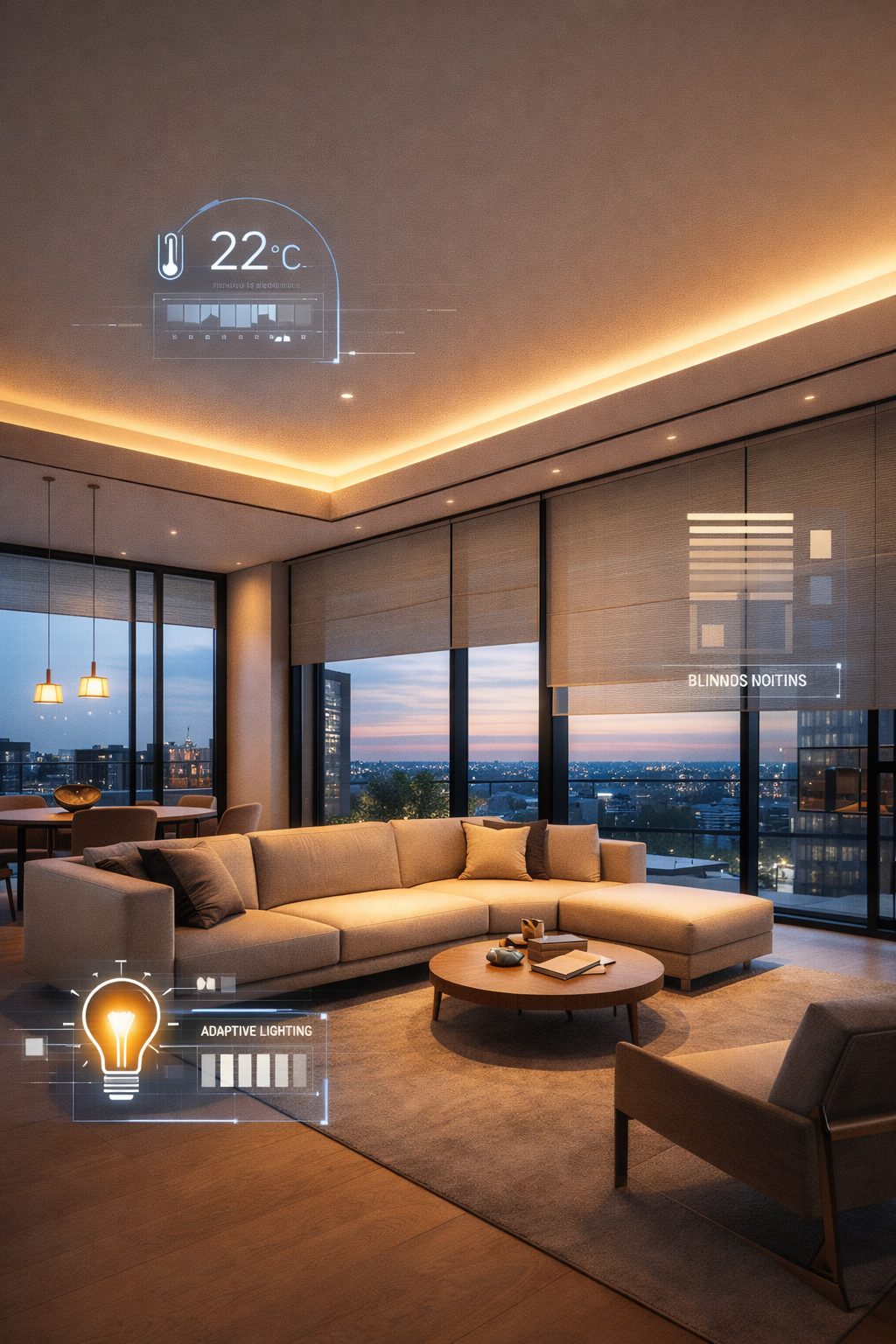
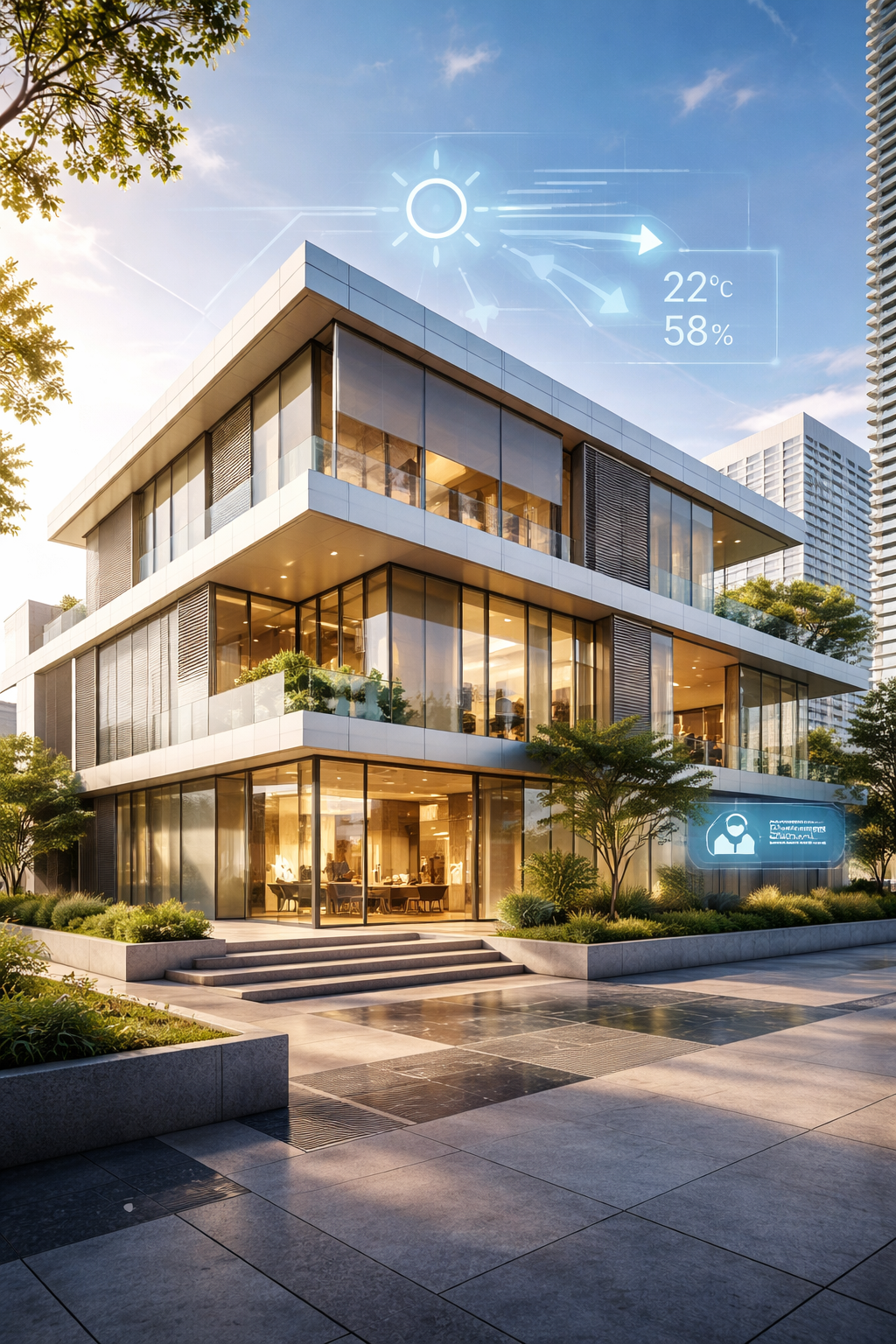
At its core, this trend marries technology with spatial design. Smart sensors continually monitor variables like daylight levels, indoor air quality, temperature, and space usage, giving buildings the ability to adjust heating, lighting, and ventilation automatically, thereby reducing energy waste and elevating comfort standards. Adaptive shading systems can respond to sun angles to minimize glare while maximizing natural light.
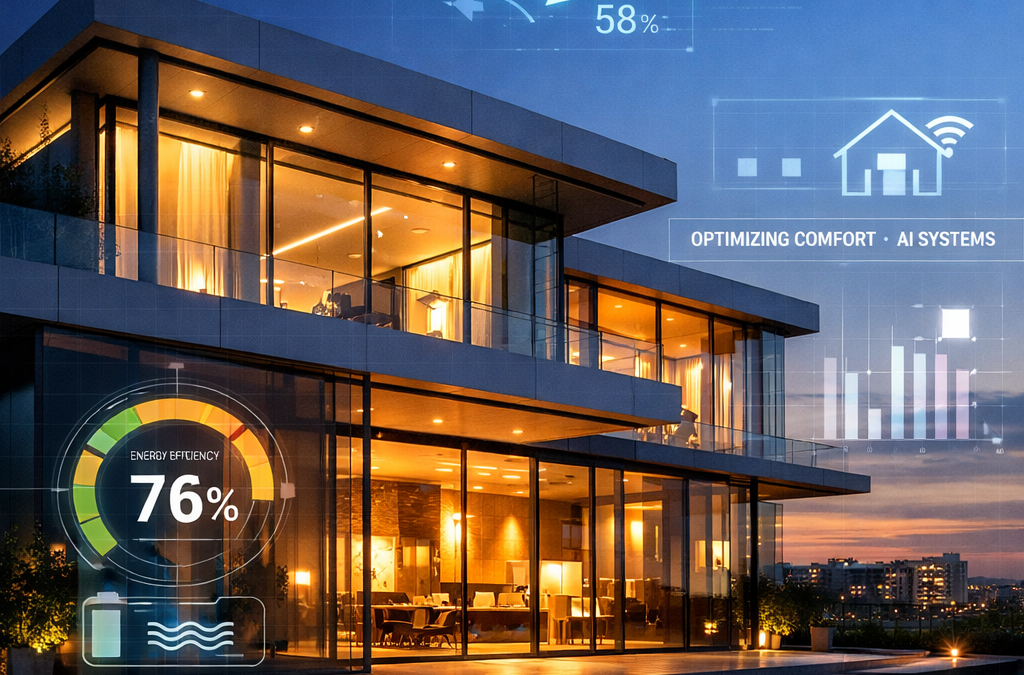
For architects, the implication is clear: performance metrics become design tools. Spaces are planned not just for form and function, but also for feedback loops – systems that evolve alongside occupant needs. Clients benefit from healthier indoor environments, lower energy costs, and buildings that “learn” over time. Better yet, this technology translates visually, with dashboards showing real-time energy data and responsive behaviours enhancing transparency and storytelling for residents.
In a world increasingly focused on sustainability and human wellbeing, smart adaptive buildings aren’t just innovative – they’re essential. As we design for 2026, technology isn’t an add-on; it’s the new structural fabric shaping how we live, work, and interact with our surroundings.